Free UK Delivery on All Orders — British Made, Ships Same Day

By Conor O'Hara (Precision)2026-05-065 min read

Fridge Temperature Data Logger: The Complete UK Guide for 2026

Everything you need to know about choosing, using, and maintaining a fridge temperature data logger — from food safety compliance to calibration standards, with real-world pricing and specs for UK buyers.

What Is a Fridge Temperature Data Logger?

Fridge temperature data logger device

A fridge temperature data logger is a device that continuously records the internal temperature of your refrigerator or cold storage unit, storing readings at set intervals for later review. Simple as that. It's not just a thermometer you glance at — it's a record-keeper, building a timestamped history of every fluctuation your fridge goes through.

I've been obsessive about precision for years. Teaching secondary school science means I can't tolerate sloppy measurements — and honestly, that carries over into everything I do at home. My baking demands exact temperatures. My fridge? Same standard.

Core function: Records temperature readings at intervals from 1 second to 24 hours
Storage capacity: Typically 16,000 to 1,000,000+ data points
Accuracy range: ±0.3°C to ±1.0°C depending on model
Common formats: USB temperature data logger, wireless/Bluetooth, WiFi-connected

These devices differ from a standard digital thermometer data logger in one important way: they're designed specifically for the sustained cold environment of refrigeration. That means condensation resistance, battery performance at low temperatures, and alarm thresholds set around the critical 0–8°C food safety range.

Why You Actually Need a Temperature Logger

Compliance. That's the short answer for anyone in food service, pharmacy, or healthcare. But there's more to it than ticking boxes.

The Food Standards Agency requires businesses storing chilled food to maintain records proving temperatures stayed between 0°C and 5°C (with an 8°C legal maximum). A fridge temperature data logger automates this entirely. No more staff forgetting to write down readings on a clipboard at 6am.

For Businesses

Environmental Health Officers can request temperature records going back months. Without a data logger for temperature monitoring, you're relying on manual checks — typically twice daily. That leaves 22 hours of gaps. What happened overnight when the door seal failed? You won't know.

For Home Users

Sounds excessive? Well, actually, it isn't. I started logging my fridge temperatures after a power cut ruined £80 worth of ingredients I'd bought for a celebration cake. Buttercream components, fresh cream, chocolate ganache bases — all gone. A USB temperature data logger would've shown me exactly when the temperature rose above safe limits and whether anything was salvageable.

If you're into precision baking or crafting with temperature-sensitive materials (resin work, anyone?), knowing your storage conditions isn't paranoia. It's just good practice.

Types of Temperature and Humidity Data Loggers

Temperature and humidity data logger types

Not all loggers do the same job. Here's what's actually available in the UK market this spring.

USB Temperature Data Logger

The most common type for fridge monitoring. Plug it into your computer to download data as a CSV or PDF. No software subscription needed with most models. The danoplus range offers this connectivity as standard, which keeps things straightforward., a favourite among Britain’s tradespeople

K Type Thermocouple Thermometer Data Logger

These use external probes — brilliant for monitoring multiple points or reaching into sealed units. A K type thermocouple thermometer paired with a logging function gives you flexibility that internal sensors can't match. You can monitor the air temperature AND the actual product temperature simultaneously.

Temperature and Humidity Data Logger

Dual-function units that track both moisture and heat. Essential for pharmaceutical storage, wine cellars, and anywhere condensation causes problems. A temperature humidity data logger typically costs 15–30% more than a temperature-only unit, but the data's invaluable if humidity matters to your application.

Wireless and WiFi Loggers

Real-time alerts sent to your phone when temperatures breach thresholds. Premium option. Expect to pay £80–£200+ for reliable wireless units with cloud storage. Worth it for commercial kitchens running multiple fridges and freezers.

Multi-Channel Thermocouple Loggers

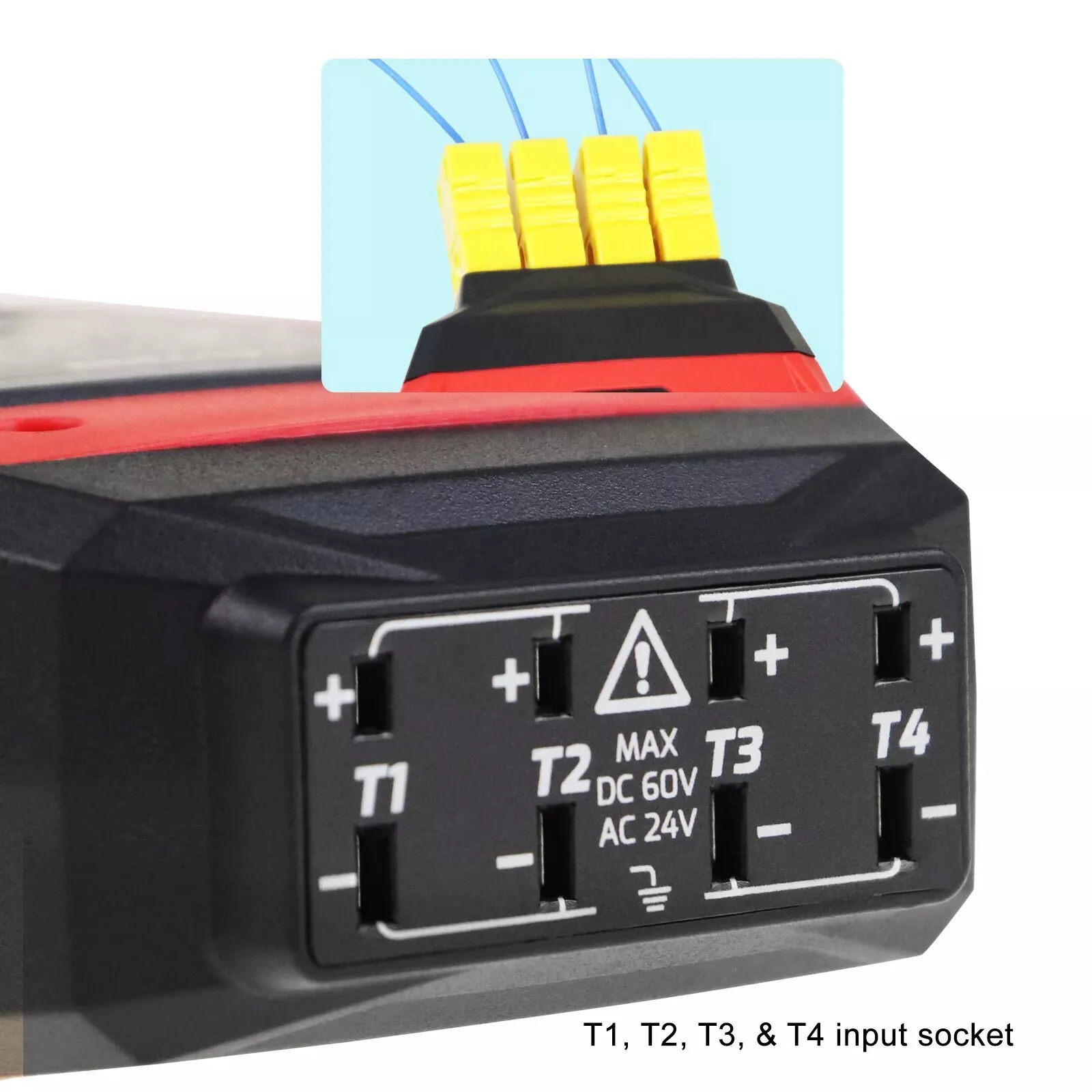
The danoplus 4-channel thermocouple thermometer represents this category — monitoring four separate points simultaneously. Ideal for walk-in cold rooms or when you need to verify temperature uniformity across a large unit.

Key Features to Look For in a Fridge Temperature Data Logger

Data logger with key feature indicators

Accuracy matters most. Everything else is secondary. Here's my priority list after testing several units over the past two years.

Accuracy and Resolution

Target: ±0.5°C or better. Anything worse than ±1.0°C isn't fit for food safety compliance. The DANOPLUS Digital Thermometer achieves high-precision readings at just £72.11 — proper bang for your buck when you consider it's British-made with free delivery in 1–3 days.

Logging Interval

How often does it take a reading? For fridge monitoring, every 10–15 minutes is the sweet spot. More frequent than that and you'll fill the memory too quickly. Less frequent and you might miss a critical spike during a door-open event.

Battery Life

Cold temperatures murder batteries. Look for units rated to last 6+ months at fridge temperatures (2–5°C). Some cheaper loggers claim "2-year battery life" but that's at room temperature. In a fridge? You'll be lucky to get 8 months from those.

Data Export

PDF reports are handy for compliance audits. CSV files let you do your own analysis. The best temperature data logger UK options offer both. I personally prefer CSV — I can drop it into a spreadsheet and spot patterns immediately.

Alarm Functions

Visual LED alerts, audible alarms, or push notifications. For a fridge logger, you want at minimum a high-temperature alarm set at 8°C. Some units offer programmable dual alarms (high and low), which protects against freezing as well.

Minimum specs for food safety compliance:
Accuracy: ±0.5°C | Range: -30°C to +70°C | Interval: adjustable, 1 min to 2 hours | Memory: 16,000+ readings | Certification: traceable calibration certificate, popular across England

Temperature Data Logger UK: 2026 Comparison

Temperature data logger comparison models

I've pulled together the specs that actually matter. No fluff — just the numbers you need to make a decision.

Feature Budget USB Logger DANOPLUS Digital Thermometer Mid-Range Wireless Premium Multi-Channel
Price £15–£25 £72.11 £60–£120 £150–£300
Accuracy ±1.0°C ±0.5°C ±0.3°C ±0.2°C
Connectivity USB only USB WiFi/Bluetooth USB + WiFi
Channels 1 1 1–2 4+
Battery Life (in fridge) 3–6 months 12+ months 6–9 months Mains powered
Memory Capacity 8,000 readings 32,000 readings 50,000+ readings 1,000,000+ readings
Calibration Certificate Not included Available Included Included (UKAS traceable)
UK Delivery 3–7 days 1–3 days (free) 2–5 days 3–5 days

Honestly, I've tried cheaper alternatives and they just don't cut it for anything beyond casual home use. The sensors drift after a few months, the software's clunky, and good luck getting a replacement if something fails. The danoplus units sit in that sweet spot — professional accuracy without the professional price tag.

How to Set Up Your Fridge Temperature Data Logger

Setting up a fridge temperature data logger

Getting started takes about five minutes. Here's the process I follow.

Step 1: Configure Before Placing

Connect your logger to a computer first. Set your logging interval (I'd recommend every 10 minutes for fridge use), your alarm thresholds (high: 8°C, low: -1°C), and the start time. Some units start logging immediately; others let you set a delayed start.

Step 2: Placement Matters

Don't stick it on the door shelf. That's the warmest, most variable spot. Place your temperature logger in the middle shelf, towards the back — this gives you the most representative reading of actual storage conditions. Avoid direct contact with the back wall where ice can form.

Step 3: Allow Stabilisation

Give it 2 hours before trusting the readings. The logger itself needs to reach thermal equilibrium with the fridge environment. Those first readings will show a downward curve as the device cools — that's normal, not a fault.

Step 4: Regular Data Downloads

For compliance purposes, download and archive your data weekly or monthly. The Health and Safety Executive doesn't specify exact download frequencies, but best practice in food service is weekly reviews with monthly formal reports.

So what's the catch? Honestly, the biggest issue I see people make is forgetting about the logger entirely. Set a calendar reminder. Download the data. Check for patterns. A data logger temperature record is only useful if someone actually looks at it.

Calibration: Getting a Calibrated Temperature Data Logger Right

Calibrated temperature data logger display

A calibrated temperature data logger isn't just a nice-to-have — it's a legal requirement for many applications. Without traceable calibration, your records might not stand up to an audit.

What Calibration Means

Calibration compares your logger's readings against a known reference standard. The result is a certificate stating the deviation at specific test points (typically 0°C, 5°C, and 25°C for fridge loggers). The British Standards Institution provides frameworks for calibration procedures under BS EN 12830 for temperature recorders in transport and storage.

How Often?

Annual calibration is the industry standard. Some high-risk environments (pharmaceutical cold chain, blood storage) require 6-monthly checks. My recommendation? Annually for food service, with a mid-year spot-check against a known reference thermometer., with availability in Scotland

UKAS vs Non-UKAS

UKAS-accredited calibration costs more (typically £40–£80 per unit) but provides internationally recognised traceability. Non-UKAS calibration from a reputable supplier like danoplus still gives you documented accuracy — it's just not accredited to the same formal standard. For most food businesses, non-UKAS traceable calibration is perfectly acceptable.

The danoplus thermocouple data logger range supports recalibration, which means you're not buying a disposable unit every year. That matters when you're watching costs.

Frequently Asked Questions

What temperature should a fridge data logger be set to alarm at?

Set your high alarm at 8°C — this is the UK legal maximum for chilled food storage. Set a low alarm at -1°C to prevent accidental freezing. Most food safety professionals recommend keeping fridges between 1°C and 5°C, with 3°C being the ideal target for best food preservation and safety compliance.

How often should I download data from my USB temperature data logger?

Download weekly for active monitoring, monthly at minimum for compliance records. Most USB loggers store 16,000–32,000 readings, so at 10-minute intervals you'll have roughly 45–90 days of capacity before data overwrites. The DANOPLUS Digital Thermometer stores 32,000 readings, giving approximately 222 days at 10-minute intervals.

Can I use a temperature and humidity data logger in a fridge?

Yes, and it's recommended for pharmaceutical storage and produce preservation. Fridge humidity typically sits between 30–50% RH. A temperature humidity logger helps identify condensation issues that cause food spoilage or packaging degradation. Ensure the unit is rated for operation at 0–8°C with condensation resistance.

What's the difference between a thermocouple logger and a built-in sensor logger?

A K type thermocouple thermometer data logger uses an external probe connected by wire, allowing you to place the sensor inside the fridge while keeping the display unit outside. Built-in sensor loggers sit entirely inside the fridge. Thermocouple versions offer faster response times (under 1 second vs 30+ seconds) and can measure product core temperatures directly.

Do I need a calibrated temperature data logger for EHO inspections?

Technically, UK food hygiene regulations require "accurate" temperature monitoring but don't mandate UKAS calibration specifically. That said, a calibration certificate demonstrates due diligence and satisfies most Environmental Health Officers. Annual calibration costing £40–£80 per unit is standard practice and strongly recommended for any food business.

Where can I buy a reliable temperature data logger in the UK?

Specialist suppliers like danoplus.co.uk offer British-made precision instruments with free UK delivery in 1–3 days. Prices start from £72.11 for a digital thermometer with logging capability. For temperature data logger UK buyers, look for suppliers offering calibration services, technical support, and next-day dispatch as standard.

Key Takeaways

  • A fridge temperature data logger automates compliance — replacing manual checks with continuous 24/7 monitoring at intervals as frequent as every 10 seconds.
  • Accuracy of ±0.5°C or better is essential for food safety compliance; the DANOPLUS Digital Thermometer delivers this at £72.11 with free UK delivery.
  • USB loggers offer the best value for single-fridge monitoring, while wireless options suit multi-unit commercial kitchens needing real-time alerts.
  • Annual calibration is industry standard — budget £40–£80 per unit for traceable certification that satisfies EHO inspections.
  • Place loggers on the middle shelf, towards the back — never on the door — for representative temperature readings.
  • A temperature and humidity data logger adds value for pharmaceutical storage, wine preservation, and anywhere condensation causes product damage.
  • K type thermocouple options provide sub-1-second response times and the flexibility to measure both air and product core temperatures simultaneously.

Ready to try DANOPLUS?

Shop Now — £72.11